
SAN DIEGO: 619-465-2550
Phoenix: 866-786-7329
A conex box is a steel shipping container used for secure, weatherproof storage or transport. The name comes from the U.S. military’s “Container Express” system, and today the terms conex box, shipping container, and storage container all describe the same all-steel box.
Conex is short for “Container Express,” a system the U.S. Army developed from a 1948 transporter design and rolled out during the Korean War era. The military moved so much cargo in these boxes that by 1965 it owned around 100,000 conex boxes, and the concept was later standardized into the ISO shipping container that now moves most of the world’s freight.
That military history is why the same steel box goes by so many names today. Soldiers called it a conex; the shipping industry standardized it; the storage industry rents it. Whatever the label, the box outlived its cargo career and became the toughest storage building you can buy without pouring a foundation.
We’ve rented and sold conex boxes from our San Diego and Phoenix yards since 1977, tens of thousands of deliveries worth. This guide answers everything people ask us before they rent or buy one: what the names mean, what the sizes hold, what drives the price, and how delivery actually works.
Conex box vs. shipping container vs. storage container, is there a difference?
No, functionally they're the same product, and anyone selling them as different things is playing word games. Here's how the names actually get used:
Shipping container / cargo container / sea container:
The freight-industry names. A “one-trip” shipping container has made a single ocean crossing and is the closest thing to new.
ISO container:
A container built to the international standard dimensions, which all standard conex boxes are. More in our ISO container explainer.
The practical takeaway: when you compare quotes, compare the box (size, condition, delivery), not the vocabulary.
Standard conex boxes are 8 ft wide and 8.5 ft tall, in lengths of 10, 20, or 40 feet. The right size depends on what you’re storing and how much delivery space your site has.
| SIZE | DIMENSIONS (L × W × H) | CAPACITY | BEST FOR | DETAILS |
|---|---|---|---|---|
| 10 ft | 10′ × 8′ × 8.5′ | ~560 cu ft | Tools, garage overflow, tight sites | 10 ft containers |
| 20 ft | 20′ × 8′ × 8.5′ | ~1,170 cu ft | Jobsites, renovations, retail stock, the industry standard | 20 ft containers |
| 40 ft | 40′ × 8′ × 8.5′ | ~2,390 cu ft | Industrial storage, large projects, inventory | 40 ft containers |
A few variants exist beyond the standards, high-cube containers add a foot of height, and 16 ft units appear occasionally, but the 10/20/40 lineup covers nearly every storage need and is what’s reliably in stock. Full interior measurements, door openings, and weights are in our container dimensions guide.
Rental pricing depends on size and rental length; purchase pricing depends on size and condition.
Whether you rent or buy, five factors move the number:
Get a same-day number with a quote request, or browse containers for sale and rentals.
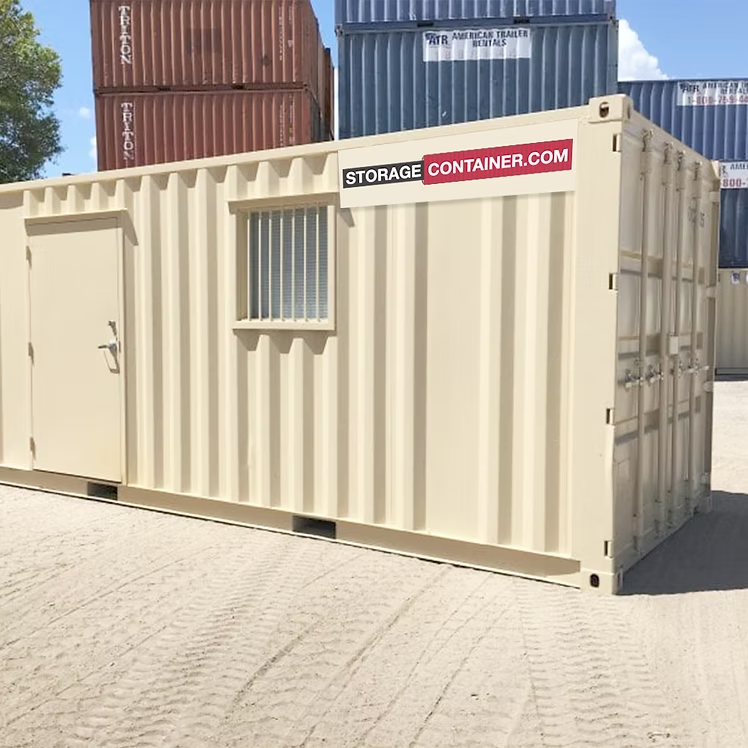
Rent if your need has an end date; buy if it doesn’t. That one sentence settles most cases, but here’s the full logic:
What are conex boxes used for?
A conex box is about as flexible as storage gets. It holds tools on jobsites, inventory behind businesses, and household goods through remodels, and purchased units can even be converted into offices and workshops. Most of ours end up doing one of four jobs:
Jobsite storage: Contractors lock tools, materials, and equipment in them overnight. Steel walls end the “truck got broken into” problem, more in construction storage containers.
Business inventory: Retailers and manufacturers use containers as warehouse annexes for overflow and seasonal stock, at a fraction of leased-warehouse cost, see commercial storage.
Home projects and moves: A container in the driveway during a remodel or between houses means loading on your schedule, not a truck-rental clock. Compare with self-storage before you decide.
Conversions: With custom modifications (purchased containers only), a conex becomes a workshop, equipment enclosure, pop-up space, or container office with AC/heat and a finished interior.
Yes, a conex box in good condition is wind- and watertight, built to cross oceans on deck. Steel walls, a sealed roof, and door gaskets keep out rain, dust, and pests.
Two caveats worth knowing. First, “in good condition” matters: a C-grade used box may have dents or worn gaskets, which is exactly why we encourage a walk-around at the yard. Second, sealed steel can sweat in humidity swings, container condensation is manageable with airflow and moisture traps, and our team will tell you if your use case needs them. For insulation against heat, see insulating a container.
More secure than almost any shed or trailer, for one structural reason: it’s a welded steel box with doors that lock from the outside. Every rental container and every one-trip unit we sell includes a steel lock box welded to the door, a shroud that encloses your padlock so bolt cutters and pry bars have nothing to grab. On used purchases, check the unit, not every used box carries one.
On jobsites, that lock box is the difference-maker: theft happens when a lock is exposed. Our full checklist, locks, placement, lighting, what actually gets stolen, is in the jobsite container security guide.
We deliver on a tilt-bed truck that backs in, tilts, and slides the container onto your prepared spot. What your site needs:
About 60 total feet for 10–20 ft containers; about 120 feet for 40 ft containers (truck + container + slide-off room).
Compacted dirt, gravel, or pavement all work. Railroad ties under the corners help drainage.
Watch for power lines and branches on the approach.
The full checklist with diagrams is on our delivery page. Tight site? Send a photo with your quote request and we’ll tell you honestly what fits, sometimes the answer is two smaller boxes instead of one big one.
We stock every size at both yards, San Diego (3407 Bancroft Dr, Spring Valley) and Phoenix (4232 S 15th Ave). Both showrooms let you walk the lot and open the doors of the exact container you’re considering, the honest way to buy used, and the fast way to pick a size.
Request a quote and we’ll answer the same business day with sizes, availability, and delivery for your address.